

Skip to content

The Council’s MFF budget proposal: bad news for AgoraEU

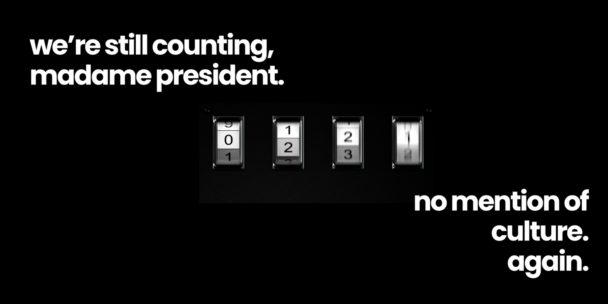
The Council has unveiled its proposed budget allocations for the next long-term EU budget and it’s bad news: a 33% reduction in budget for AgoraEU compared to the Parliament’s position.

Reading between the strands: AgoraEU after Parliament and Council

Culture Action Europe calls for an AgoraEU that covers all cultural and creative sectors fairly, protects the cross-sectoral nature of European cultural cooperation, and provides more ambitious funding for culture as a whole. Where sectors have specific needs, they must be addressed consistently, not selectively, across various sectors.

Culture is being erased from EU research and innovation funding. How do we save it?

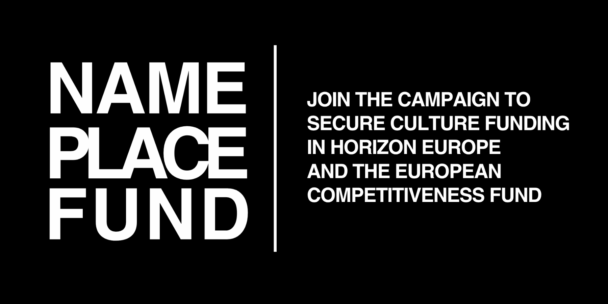
A coalition of cultural networks started the ‘Name, Place, Fund’ campaign to secure the presence of culture for research, innovation and competitiveness in the 2028-2034 budget.

What We Talk About When We Talk About Socially Engaged Arts

Socially engaged arts are collaborative, community-centred practices where artists and participants co-create artistic responses to social, environmental, and political issues. But how does that actually work on the ground? We’ve put together a reflective blog post to explore what these practices look like in action.

An elevated, high-angle view of the image shows a large, circular conference hall with wooden flooring and multiple tiers of seating where numerous people are seated at desks equipped with monitors. A giant, ring-shaped light fixture hangs from the concentric wooden ceiling directly over the center of the room. Digital display screens are mounted on the upper wooden walls, overlooking the formal meeting of the European Council.
Abstract, glowing ring of light with radiating orange, blue, and yellow streaks against a black background.

Culture Action Europe is looking for Communications Intern. Duration: (3 months) September-November 2018, preferably full-time Location: Brussels Start date: 3 September 2018 Culture Action Europe (CAE) is looking for a dynamic, efficient, multi-skilled student and/or graduate in communications (Bachelor or Master’s) with a keen interest in culture, campaigning, community mobilisation and event organisation. Who are we looking for? Students … Continued

REGISTER before 15 September and get your early bird price! Culture Action Europe’s next Beyond the Obvious Conference takes place on 25-27 October 2018 in Timisoara, Romania. Check out Beyond the Obvious Conference website for more information. ctrl+shift HUMAN: Arts, Sciences and Technologies in Coded Societies Code, algorithms and artificial intelligence complement the human condition, can solve … Continued

On 30 May 2018, the European Commission presented their proposal for the Creative Europe programme 2021-2027. Culture Action Europe (CAE) welcomes continuity of the programme as a promising development strongly promoted by CAE and its members. Under the “Investing in people” chapter of the EU’s long-term budget proposal, new Creative Europe offers a more balanced … Continued

Culture and education share fertile ground for cultivating the skills needed in the societies of both today and tomorrow as well as our own personal development. In policymaking, they are the responsibility of the same directorate-general of the European Commission and some times of the same national ministry. However, this natural interlinkage is increasingly taken … Continued

Together with 66 organisations from European cultural and creative sectors, Culture Action Europe send a letter to President Juncker asking for the boost in the EU culture budget. In this letter we urge the EU to give a significant and much-needed boost to the EU’s budget dedicated to culture. The cultural and creative sectors provide … Continued

In this conversation with Culture Action Europe (CAE), Tere Badia, incoming Secretary General of CAE, shares her vision on the future of European networks and the arts & cultural sector in times of uncertainties. Culture Action Europe (CAE): Social, political and cultural environment of 90-ies, when European networks started mushrooming, was essentially different from the … Continued