A Digital Democracy Preference Toolkit has been released building upon the perspectives of almost 500 European citizens and governmental actors to illustrate how to advance digital citizens’ participation.
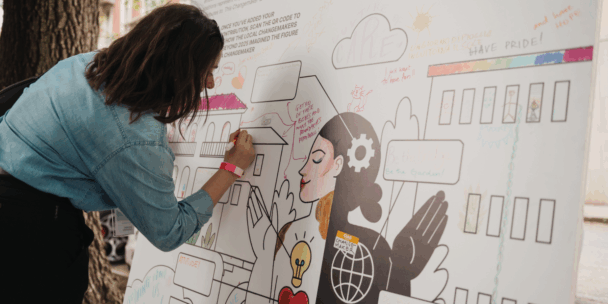
Socially engaged arts are collaborative, community-centred practices where artists and participants co-create artistic responses to social, environmental, and political issues. But how does that actually work on the ground? We’ve put together a reflective blog post to explore what these practices look like in action.
This is the final of three online meetings of the Action group on Working Conditions to consult members, share views and expertise, and co-create a position paper to feed into the upcoming EU Artists’ Charter, including on its principles, governance and implementability.
This is the second of three online meetings of the Action group on Working Conditions to consult members, share views and expertise, and co-create a position paper to feed into the upcoming EU Artists’ Charter, including on its principles, governance and implementability.
This is the first of three online meetings of the Action group on Working Conditions to consult members, share views and expertise, and co-create a position paper to feed into the upcoming EU Artists’ Charter, including on its principles, governance and implementability.
Trust the Process is a podcast about socially engaged arts that invites you to trust the unconventionality of artistic processes and, more importantly, the impact they can have over time. This project is part of the Ask, Pay, Trust the Artist campaign and is supported by the Alliance for Socially Engaged Arts.
This lunchtime session, hosted by Reset! network and Live DMA, presents findings and policy reflections following a mapping exercise on who owns what in the live music sector.
A new report from IETM exploring what ‘fair practice’ constitutes for artists and cultural workers internationally in 5 different countries around the world through case studies.