
Skip to content

The Council’s MFF budget proposal: bad news for AgoraEU

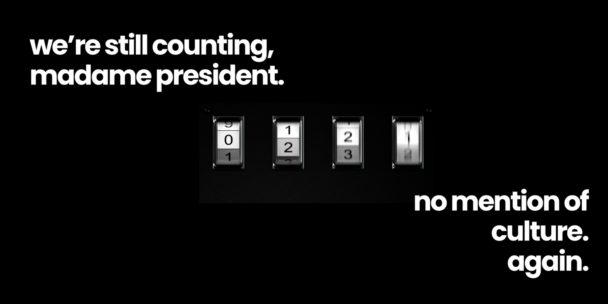
The Council has unveiled its proposed budget allocations for the next long-term EU budget and it’s bad news: a 33% reduction in budget for AgoraEU compared to the Parliament’s position.

Reading between the strands: AgoraEU after Parliament and Council

Culture Action Europe calls for an AgoraEU that covers all cultural and creative sectors fairly, protects the cross-sectoral nature of European cultural cooperation, and provides more ambitious funding for culture as a whole. Where sectors have specific needs, they must be addressed consistently, not selectively, across various sectors.

Culture is being erased from EU research and innovation funding. How do we save it?

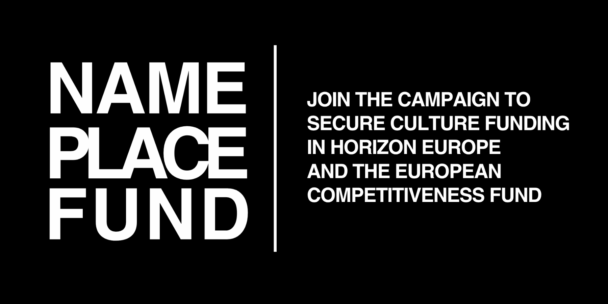
A coalition of cultural networks started the ‘Name, Place, Fund’ campaign to secure the presence of culture for research, innovation and competitiveness in the 2028-2034 budget.

What We Talk About When We Talk About Socially Engaged Arts

Socially engaged arts are collaborative, community-centred practices where artists and participants co-create artistic responses to social, environmental, and political issues. But how does that actually work on the ground? We’ve put together a reflective blog post to explore what these practices look like in action.

An elevated, high-angle view of the image shows a large, circular conference hall with wooden flooring and multiple tiers of seating where numerous people are seated at desks equipped with monitors. A giant, ring-shaped light fixture hangs from the concentric wooden ceiling directly over the center of the room. Digital display screens are mounted on the upper wooden walls, overlooking the formal meeting of the European Council.
Abstract, glowing ring of light with radiating orange, blue, and yellow streaks against a black background.

Culture Action Europe (CAE) welcomes the new “Cultural and Creative Cities Monitor”, published by the European Commission’s Joint Research Centre (JRC). This new tool provides comparable data on how European cities perform across nine dimensions – covering culture and creativity – and underlines how their performance contributes to cities’ social development and economic growth and job … Continued

The digital shift is a reality that cannot be ignored by museums. It demands appropriate competences, skills and knowledge. The Mu.SA – Museum Sector Alliance project supports museum professionals in their digital transformation journey. The Mu.SA project, where Culture Action Europe is a partner,  will produce a multitude of diverse outputs and outcomes, printed and … Continued

More than 250 non-government organisations from across Europe have today released an alternative vision for a more democratic, just and sustainable Europe. Intended to influence the debate on the future direction of Europe, this alternative vision is endorsed by organisations representing a multitude of public interest issues, including labour rights, culture, development, environment, health, women’s … Continued

On 1 March, president Junker presented White Paper on the future of Europe in European Parliament. In this White Paper, he presents 5 possible scenarios for the EU’s future. They range from: continuing as the EU is functioning now, downscaling the European project (back) to an economic union, focusing only on what seems to ‘work’, a multi-speed … Continued

What will happen to museums when digital technology shows its full potential? What features will the museum of the future have? How will it seize the opportunities offered by digital innovation? What competencies does this industry need to keep museums relevant from the twentieth century to the present? To understand what role the digital driver … Continued

Many culture makers have embraced the theme of Audience Development (AD); we all want audiences, preferably large and enthusiastic ones. But how can we demonstrate to our investors that we have taken the task seriously? How do we measure our efforts? Here, the key terms are: cultural impact; immaterial indicators; shared knowledge; shared practice; people … Continued

On top of being a buzzword in certain parts of the cultural world for few years now, audience development is one of the new priorities of Creative Europe. It brings for the first time audiences/ spectators/ users/ citizens/ participants under the spotlight, on an equal footing with artists and cultural organisations. Current experience existing in … Continued