An Agora only exists when people show up
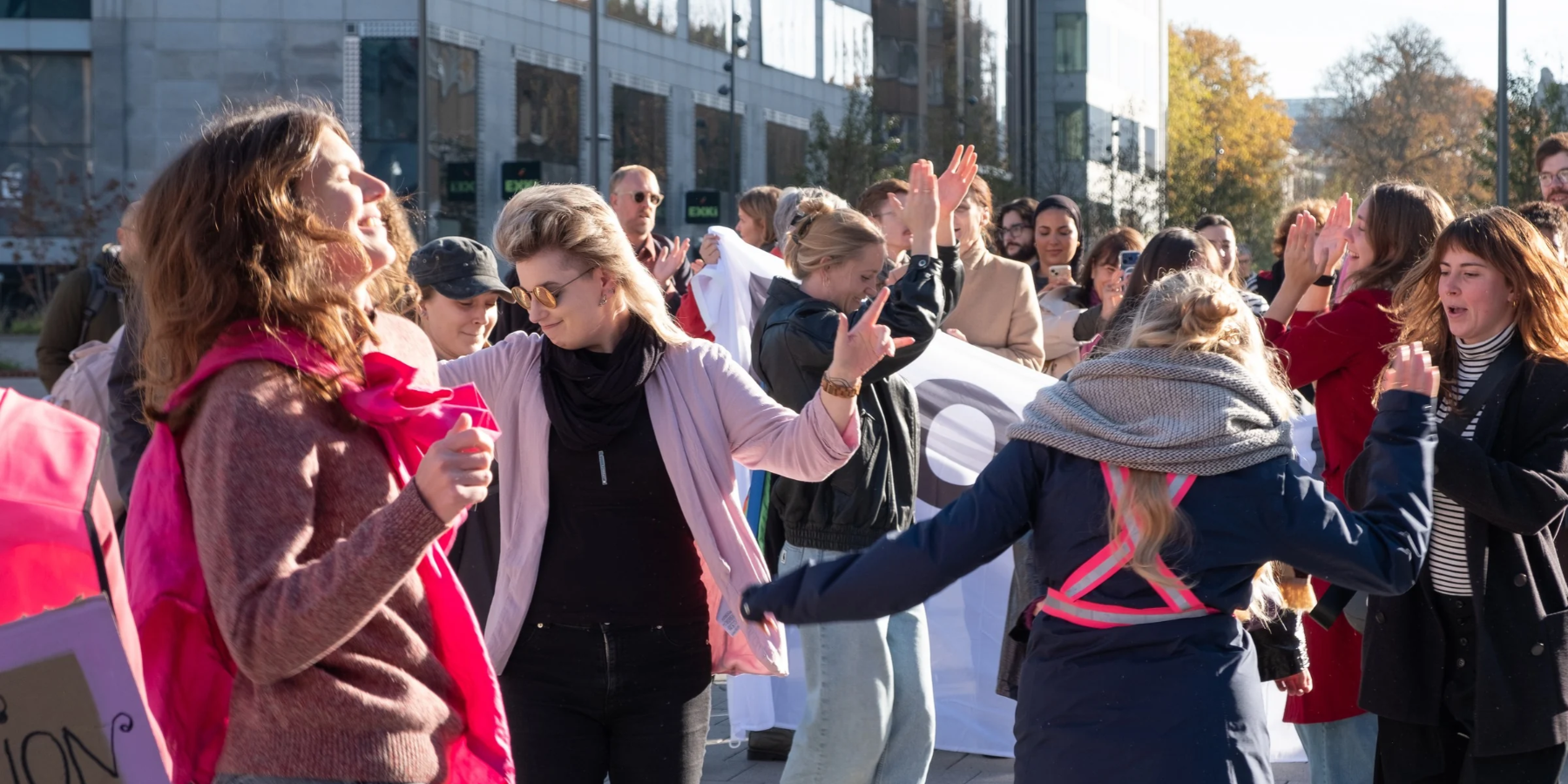
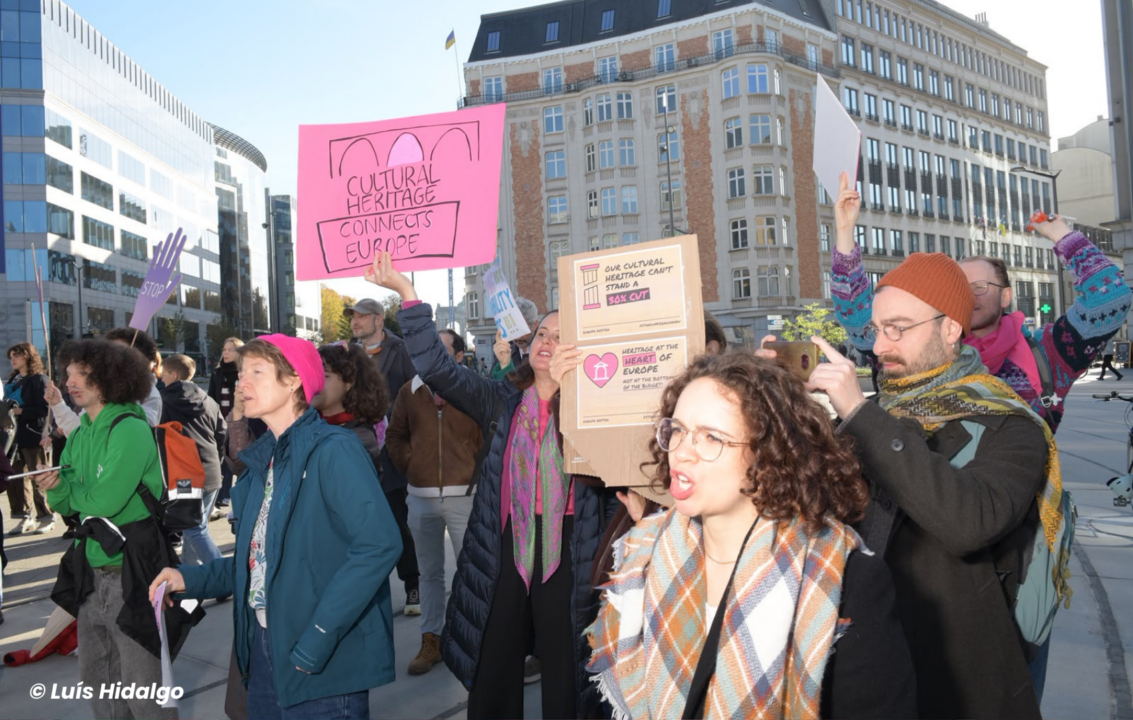
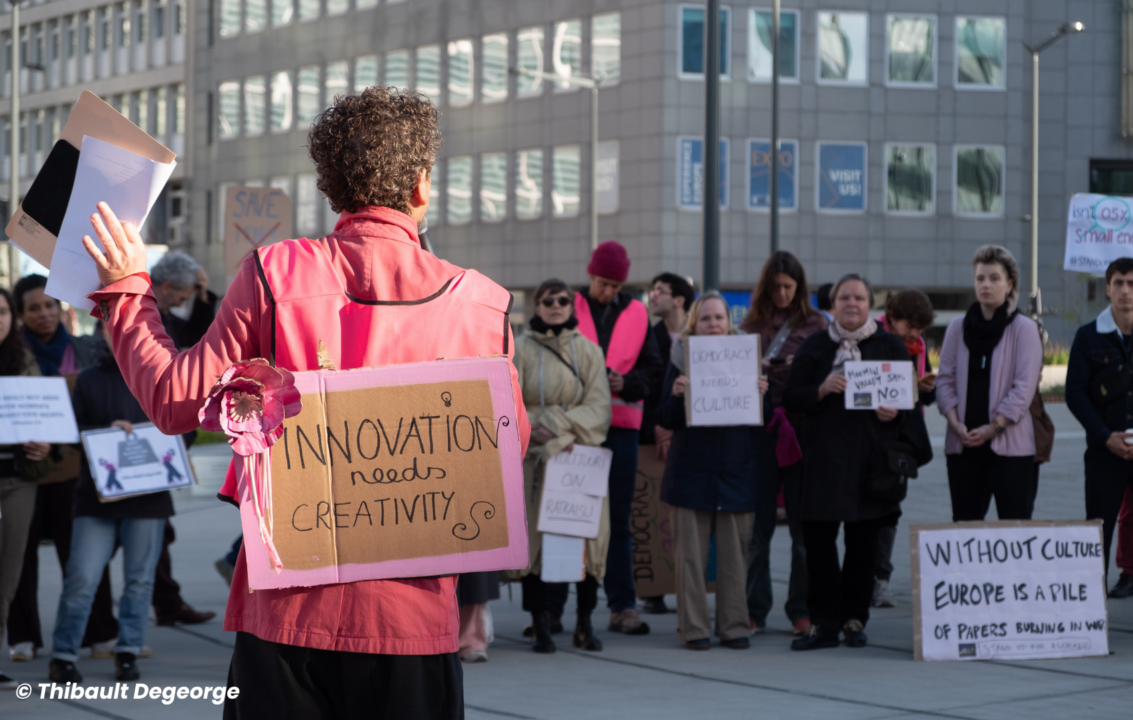
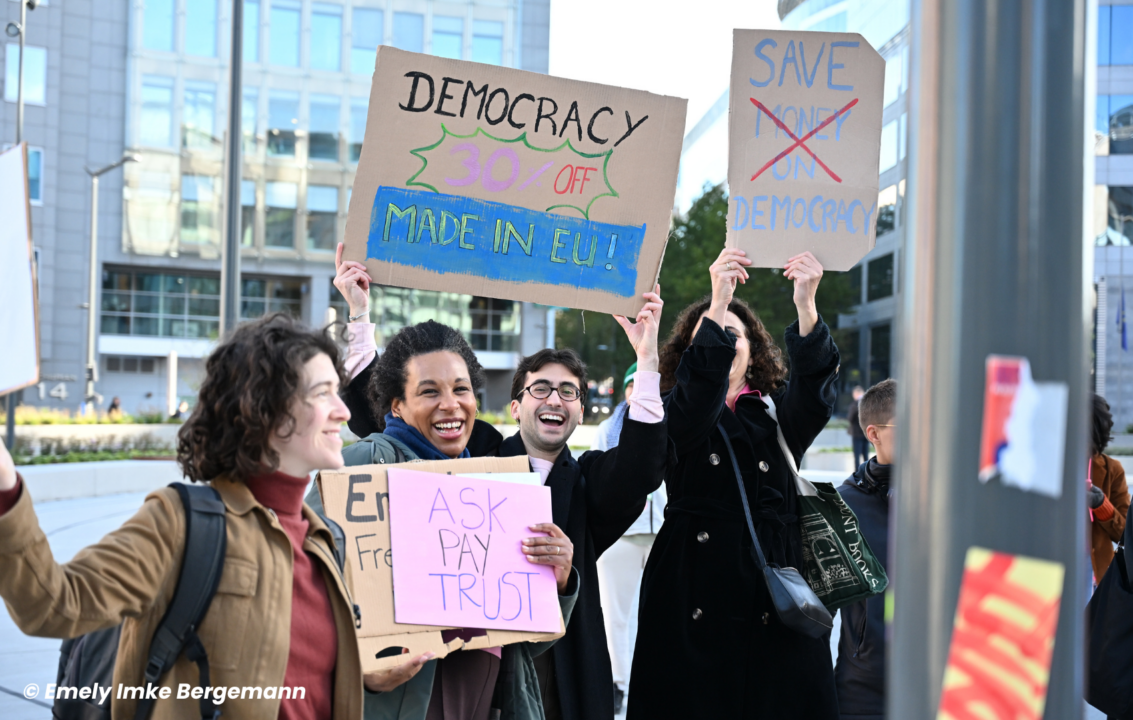
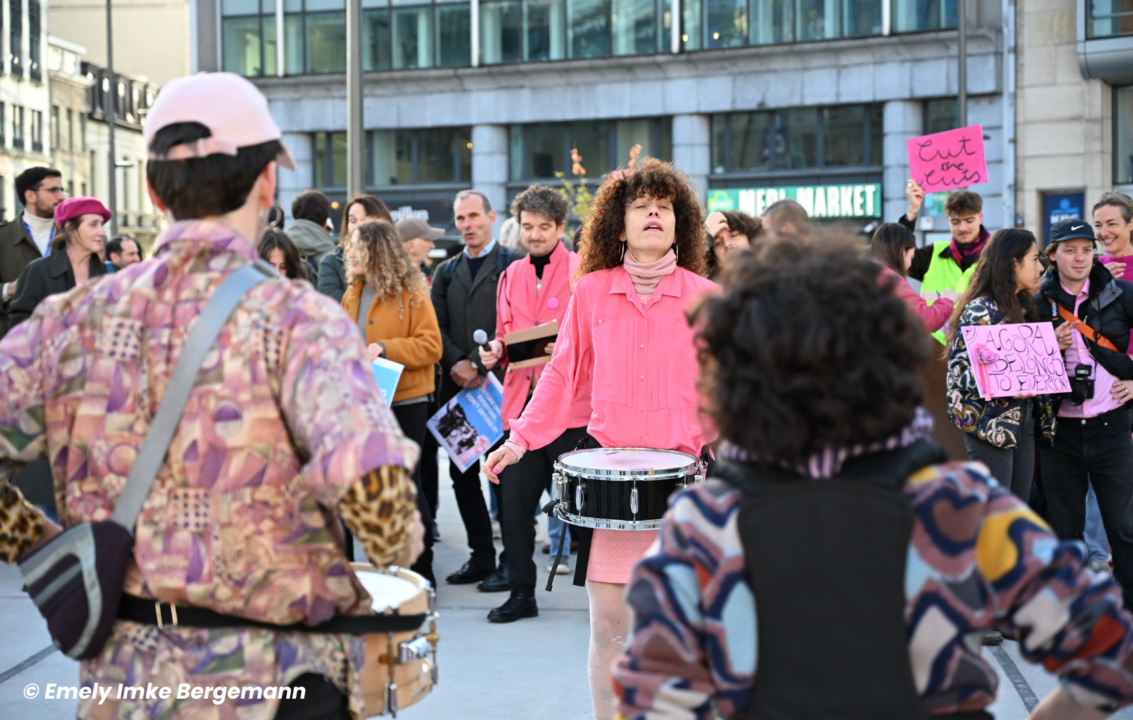
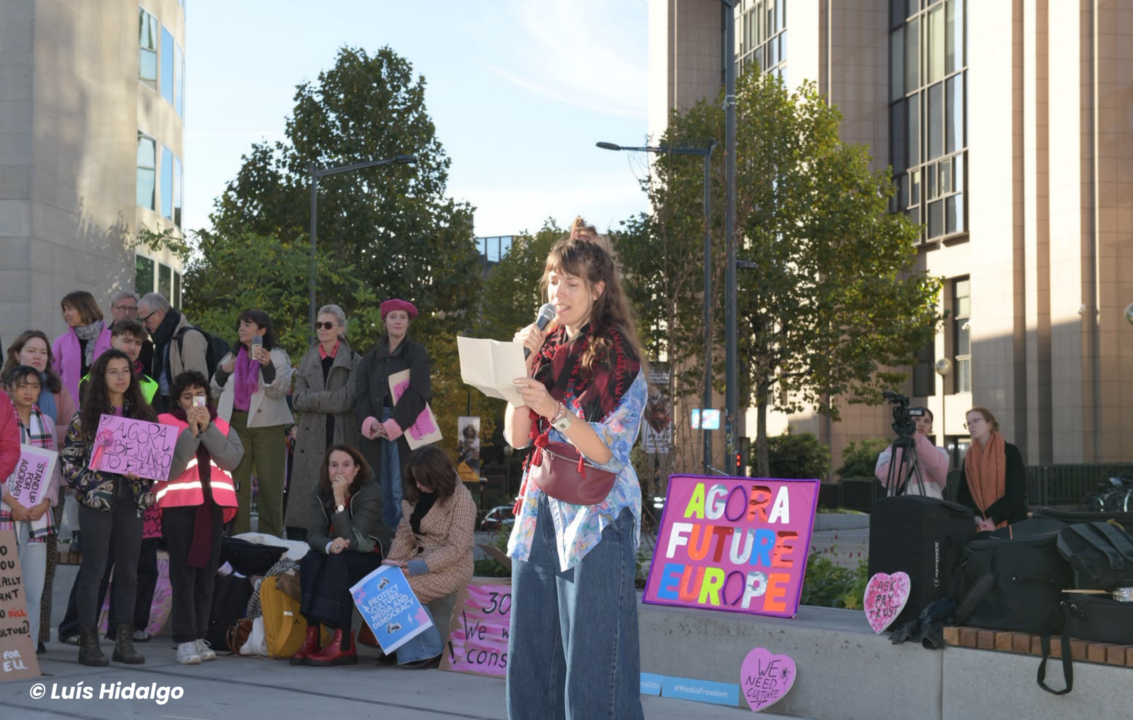
On the morning of 29 October, two weeks after the Irish Presidency of the Council of the EU presented a negotiation box proposing a 30% cut to AgoraEU, a wave of pink energy and joyful anger stormed Schuman Square, reclaiming it as what an agora should be: a space for people to gather and speak up.
AgoraEU is the future EU funding programme for culture, media and civil society, and the proposal to cut it by almost a third comes at a time when its share of the EU budget already amounts to just a tiny fraction of the whole.
Cutting AgoraEU means fewer books, films and performances, fewer independent investigations, and less support for the people and organisations defending our rights. In short, it means less space for the voices, stories and ideas that bring our democracies to life.
In response to this dreadful scenario, together with our partners and friends at Civil Society Europe, European Civic Forum, the European Federation of Journalists, and in the Future of Europe cohort, we called on the cultural, media and civil society sectors to stand up for AgoraEU.
And we did. Marvelously, and in full pink.
More than 150 artists, cultural workers, journalists and civil society representatives came together at Schuman Square to make their voices heard. There was music, poetry, laughter, anger, and a shared sense that the futures of the Creative Europe and CERV programmes are precious and need standing up for.
The energy of the crowd reminded us of the power of art and creativity as an antidote to the threats facing our democracies, especially when the decisions contributing to those threats come from the very institutions entrusted with protecting and defending them.
Thursday’s demonstration was a declaration of love for democracy.
We expressed it by demonstrating that public space belongs to all of us. We filled it with chants, music, poetry and pink. We reclaimed the agora not only as a physical space, but also as a living, breathing place where citizens can ask politicians to be accountable, challenge decisions that affect our everyday lives, and call out mistakes: loudly, collectively and surrounded by beauty.
Negotiations on AgoraEU and the next long-term EU budget are still ongoing. We are calling on the Council to reverse the cuts and move towards the allocation of €10.72 billion to AgoraEU proposed by the European Parliament.
What happened in Schuman Square is one step in a much longer journey, one that requires continued commitment and the willingness to keep showing up. Our work does not end with a beautiful morning in pink, or a few powerful pictures. If anything, that morning was a reminder of why we must keep going.
We want to express, once again, how grateful we are to everyone who proudly joined voices on 29 October. To the beautiful music of Salamba and to the powerful poetry of Miksi. To those who were there in person, standing shoulder to shoulder in the square. To those who supported us from afar, who shared our message and helped it travel further. And to those who, having heard about the demonstration, might now feel encouraged to speak up themselves, rather than remain silent.
And we are looking to everyone who, in the meeting rooms and corridors of EU, national and local institutions, has the power to make a difference. To those who will choose to stand up for AgoraEU, to defend culture, independent media and civil society, and to recognise that investing in them is not a luxury. It is an investment in the kind of Europe we want to live in.
An agora only exists when people show up.
On 29 October, we showed up, with our voices, our bodies, our joyful anger. Now, the work is to make sure those voices continue to be heard, long after the pink banners have been folded away.
Below, we share a carousel of words and images from that day: fragments of the energy that brought us together. A way to keep that morning alive, and to remember what we stood for, and what we still have to stand for.
“Where are we in this pact the three institutions have signed?
In rhetorics? In commitments? In policies ?
It is time to act for the arts.
Because arts is the lifeblood of Europe.
Because it is the raw material; the foundation, upon which all other things and humans rely.
Because there are humans that are artists.
Because humans need the freedom and the imaginations of arts.
For their multiple purposes they fullfill: from artistic experience and personal development to collecting gathering and community building.
Put one hand on the shoulder of your neighbour: arts connects humans.
It is time to act for the arts.”
– Kathrin Deventer, Secretary General at European Festivals Association (EFA)
“The proposal to cut AgoraEU is a disaster. It makes us wonder how much strategic thinking went into the new budget planning. In difficult times, we need to invest in what matters. We need to strengthen what has made Europe known around the world: its creativity, innovation, inventiveness, and the free exchange of ideas across borders. During the war, Ukraine proposed to increase its culture budget by 27% next year. So why is Europe going in the opposite direction? It’s a shameful decision.”
– Lars Ebert, Secretary General at Culture Action Europe
“They want to defund our democracy. They pick culture, media and civil society because they think they’re easy targets and no one will notice, but this is where democracy lives; if the cuts go through, people will wake up one day and ask: why are my rights not protected? Why has that film festival disappeared? Where has my local publisher gone? It causes enormous damage.”
– Nela Riehl, Chair of the European Parliament’s Committee on Culture and Education
“When local newsrooms close, nobody covers the town council, the hospital board or the local election. That gap gets filled by rumour, spin and disinformation. Journalism is how citizens hold power to account. Europe can’t defend its democracy and underfund it at the same time. Our politicians, many of them talking about the crucial role of independent journalism and press freedom at international events, do not seem to take their own words seriously. Journalism is important for security, business, trust and social inclusion. It is a civilisational issue. But to be trustworthy and honest it needs to be nurtured and protected.”
– Renate Schroeder, Director at the European Federation of Journalists
“EU funding has been essential for the sustainability of EU civil society networks and a crucial lifeline for civil society organisations in countries like Hungary and Poland where funding for civil society was reduced under political pressure: the proposed reduction of the AgoraEU budget will seriously affect the possibility for associations, to support their communities, make citizens’ voices be heard at all levels of government and act as watchdogs for rights violations.”
– Gabriella Civico, President of Civil Society Europe
Photo Copyright: © Thibault Degeorge