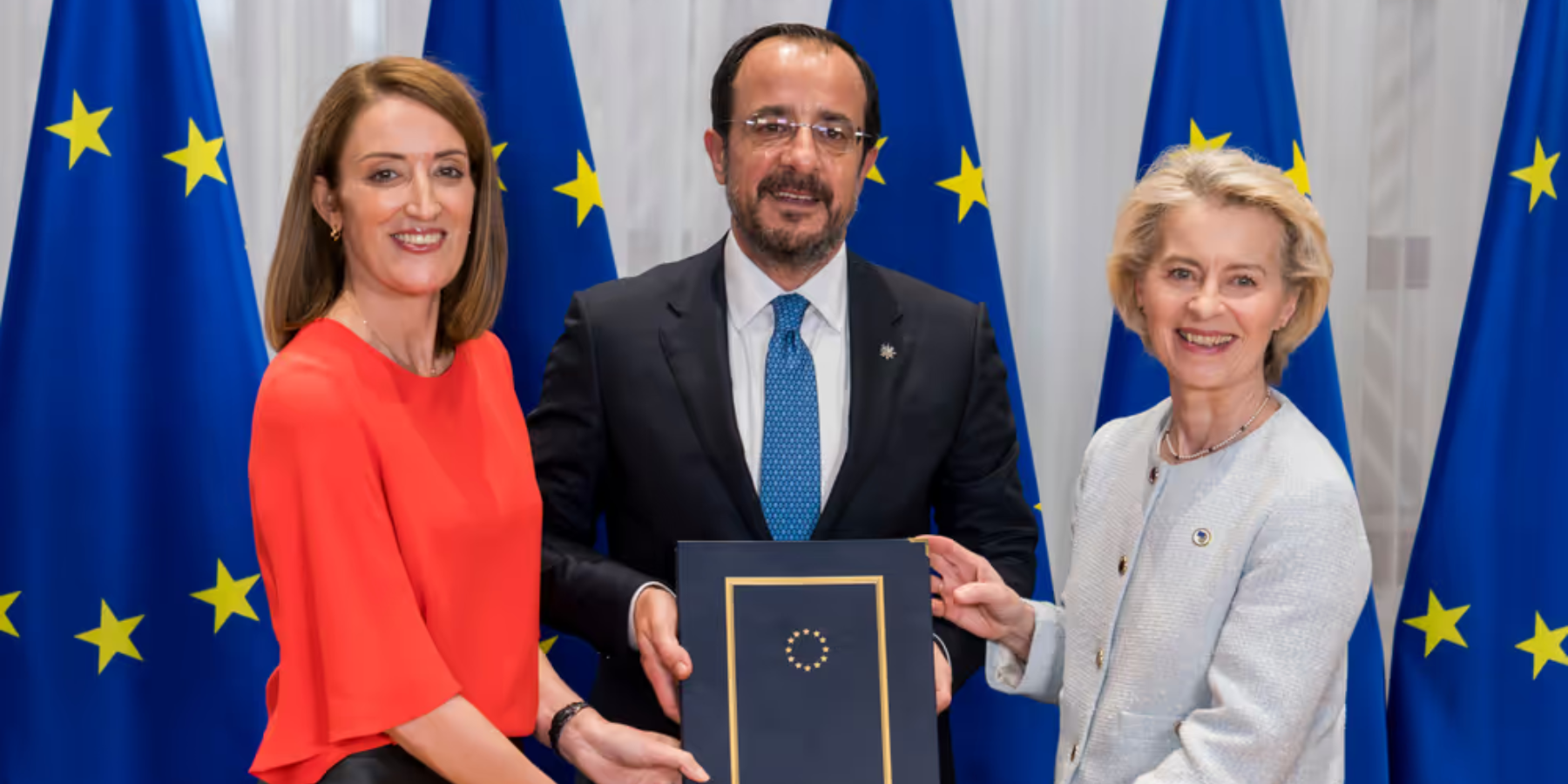
EU leaders sign ambitious Joint Declaration on Culture
Culture Action Europe welcomes the Joint Declaration ‘Europe for Culture – Culture for Europe‘ co-signed by the leaders of the European Commission, European Parliament, and Council of the EU on 18 June 2026. This marks the first time the EU institutions will unite behind common political commitments for culture.
The draft Joint Declaration “Europe for Culture – Culture for Europe” accompanied the Culture Compass in November 2025, outlining guiding principles and 12 broad commitments on culture. The document was debated and amended by the European Parliament and Council earlier this year before a provisional interinstitutional agreement was struck in May 2026. While the text has undergone some minor changes since the draft release, the content of the commitments have remained the same: the declaration affirms that culture is central to Europe’s democracy, identity, and future and must be prioritised as such.
The Joint Declaration was warmly welcomed by most MEPs during the Parliamentary debate held earlier today. MEP Nela Riehl (Greens/EFA, Germany), Chair of the European Parliament’s Committee on Culture and Education, affirmed that the declaration ‘sends a message that European culture is a cornerstone of our democracy and must be pursued with ambition.’ Glenn Micallef, the European Commissioner for Intergenerational Fairness, Youth, Culture and Sport, also declared the signing of the declaration a momentous occasion for culture in Europe:
Today we are elevating culture. We are making culture a political priority in the European Union, and we are sending a clear political signal across Europe: Europe for Culture, Culture for Europe.
The Joint Declaration takes on extra resonance for us because civil society helped shape it. Culture Action Europe contributed to the Culture Compass through our discussion paper, ‘Towards the Culture Compass: a Sector Blueprint,’ developed with 30 of our network members from across diverse sectors. The Culture Compass incorporated several proposals from the Sector Blueprint, while the Joint Declaration reflects the sector’s key principles. That is why we feel ownership of both documents and welcome the indications received from the European Economic and Social Committee and the Committee of the Regions of their intention to also endorse the documents.
The adoption of the Joint Declaration sends a strong political signal. It outlines joint commitments that compliment flagship actions announced in the Culture Compass, which among other things include:
- Safeguarding artistic freedom ‘as a cornerstone of democracy and fundamental rights within the European Union.’ This builds on the Report on the State of Culture in the EU announced in the Compass, which will have a ‘specific emphasis on artistic freedom’ and its monitoring. In parallel, the work of Culture Action Europe’s Action Group on Artistic Freedom is providing a space for knowledge-sharing and strengthening complementarity for existing initiatives on artistic freedom at the European level and will feed into the upcoming report.
- ‘Fair, just, healthy and safe working conditions,’ with a focus on fair remuneration, social protection, and the health rights of artists and cultural and creative professionals. This coincides with the upcoming EU Artists’ Charter announced in the Compass, whose development we are seeking to inform through the work of our Action Group on Working Conditions.
- Prioritising human creativity in the use, development and governance of AI, including through a ‘fair, human-centric and rights-based approach… respect[ing] cultural rights, accessibility, inclusivity and cultural diversity.’ This coincides with the AI Strategy for the Cultural and Creative Sectors expected in spring 2027, for which our Digital and AI Action Group have created a series of Recommendations that promotes human creativity, cultural rights, and more collaborative processes at the heart of the strategy.
- Enhancing cultural participation and promoting ‘inclusive access to, participation in, enjoyment and benefit of culture and cultural heritage for everyone.’ The cultural rights of youth, persons with disabilities, and people living in rural or remote areas are particularly emphasised in the Joint Declaration, building upon the upcoming report announced in the Compass on enhancing the participation of persons with disabilities, as well as measures supporting greater cultural access and support for youth through Erasmus+.
- Embracing culture in EU governance through ‘ensuring effective cultural mainstreaming within relevant EU strategies, policies and actions’ and ‘advancing initiatives aimed at improving the availability of sound and comparable data on culture.’ The latter commitment reinforces the EU cultural data hub to be established as unveiled in the Compass, which is currently framed as collecting and analysing cultural data to support the new State of Culture report.
- Promoting culture in EU external action, with the Joint Declaration itself to be promoted during ‘EU’s relations with international organisations and partner countries’ while ‘maintaining close dialogue with relevant stakeholders.’ In parallel, the Compass announced the revision of the 2016 joint-communication for an EU Strategy on international cultural relations, whose development our new Action Group on International Cultural Relations will strive to support once established.
Elsewhere in the Joint Declaration, there is also promising language on supporting synergies between ‘culture, arts, and education [as] fundamental to the development and prosperity of future societies,’ including through supporting STEAM approaches to education and promoting arts education for all, as well as promoting culture, health and well-being, protecting and safeguarding cultural heritage, embracing culture for greater regional and social cohesion, and prioritising environmental sustainability.
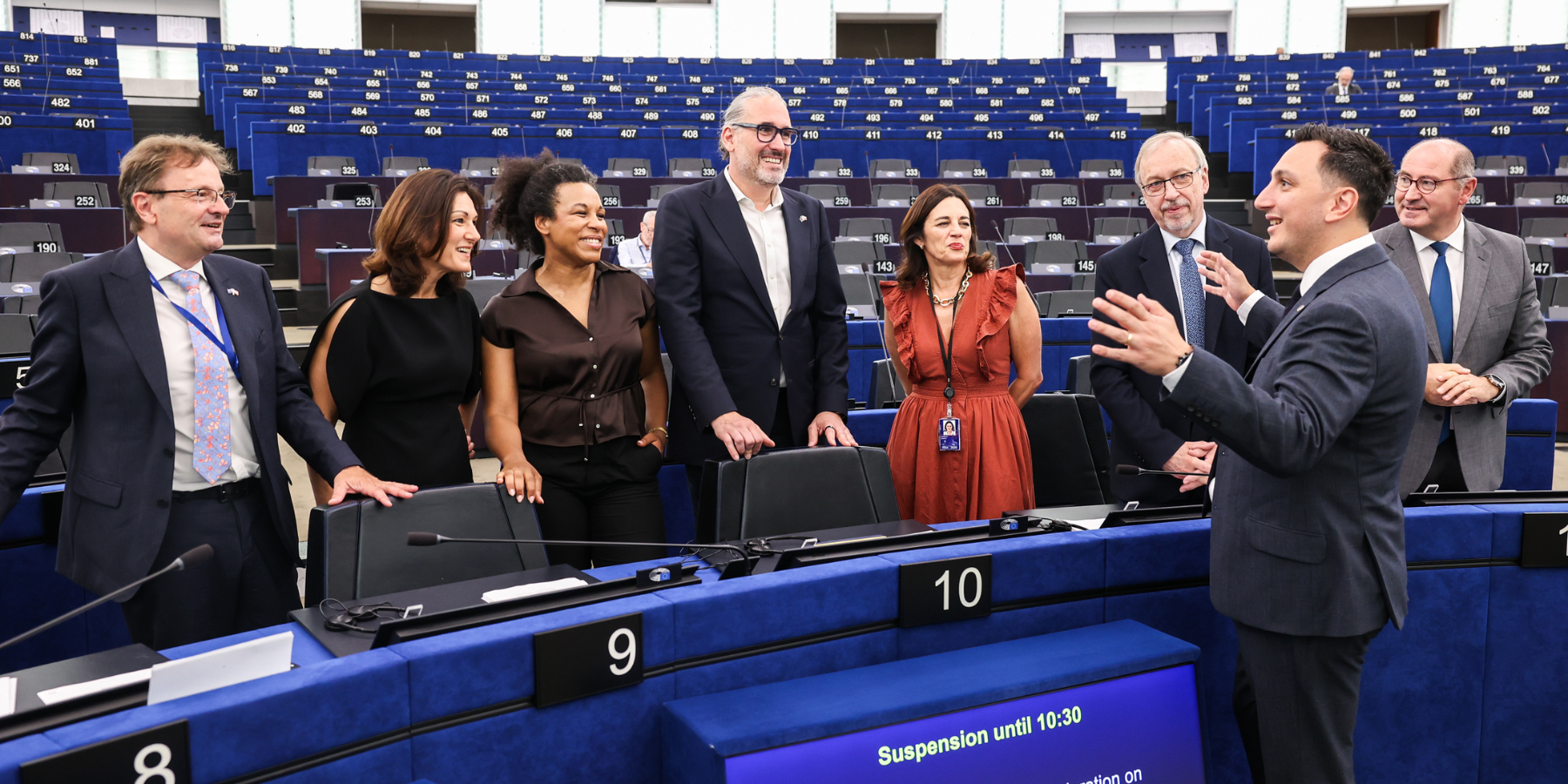
Image credit: © European Union 2026 – Source : EP | Photographer: Alexis HAULOT
Whether the Joint Declaration becomes more than a political signal, however, is contingent upon guaranteeing funding to meet the occasion. The declaration itself recognises that ‘the cultural and creative sectors and industries, including audiovisual industries, face their own challenges, necessitating targeted support and decisive action,’ but we struggle to see such targeted support prioritised in the 2028-2034 Multiannual Financial Framework (MFF) negotiations at present. We have long called for 2% of the EU budget to be allocated towards culture, including as part of our Ask, Pay, Trust and Cultural Deal for Europe campaigns, and such a financial commitment demands a strong AgoraEU programme with an autonomous, visible Creative Europe – Culture Strand earmarked at 25% while treating the European Parliament’s budgetary proposal of €10.72 billion (in constant prices) as the bare minimum to sustain the cultural ecosystem. As MEP Laurence Farreng (Renew Europe, France) put it in the parliamentary debate on the Joint Declaration earlier today:
Cultural policy in Europe is something that remains underfunded, it’s always the weakest, smallest budget in the EU, and yet the CCS are facing a funding crisis. […] The Declaration is a good step, but it’s not enough. Our creatives and innovators need protection from AI stealing their content, and we need to support AgoraEU while securing a place for culture in Horizon Europe so we can have competitiveness and sovereignty.
If culture truly is the ‘strategic resource for Europe’s competitiveness and cohesion, generating economic growth and positive spillovers across sectors and territories, creating qualified jobs, and fuelling the EU’s creative and innovative edge,’ as affirmed in the Joint Declaration, then the EU institutions must put their new political commitments into action by prioritising it accordingly. This would be particularly important in Naming, Placing, and Funding structural components for culture across Horizon Europe and the European Competitiveness Fund in the next MFF, where culture currently risks erasure, and by guaranteeing a stronger presence for culture in Global Europe and National and Regional Partnership Plans (NRPPs).
While the Culture Compass sets the direction for the next three years, the Joint Declaration ‘articulates a long-term strategic vision to place culture at the heart of Europe’s identity.’ The 20 flagship actions of the Culture Compass could end with the start of the new MFF and the 2029 European elections, but the vision of the Joint Declaration transcends 2029. This is a positive development that recognises how supporting a thriving cultural ecosystem and enabling culture to enrich our social foundations necessitates longer-term thinking. In doing so, it is worth also reflecting on the current structure for culture at the European level and whether the Union’s limited competence in culture remains adequate to meet its ambitions. At Culture Action Europe, our recent BEYOND Satellites have explored these questions and some of the points raised will be captured in the 2026 BEYOND Zines. Later this year, the 2026 instalment of our State of Culture report may provide complementary insight and analysis reflecting on the future of culture.
Overall, the signing of the Joint Declaration of the EU institutions represents an important moment for EU cultural policy and an unprecedented commitment to culture as a pillar of European democracy. These political commitments must now be supported with concrete actions, including ambitious financial commitments to culture in the next MFF, to truly place culture at the heart of Europe.
Image credit: © European Union 2026 – Source : EP | Photographer: Daina LE LARDIC