Culture beyond recognition – SOTEU 2026
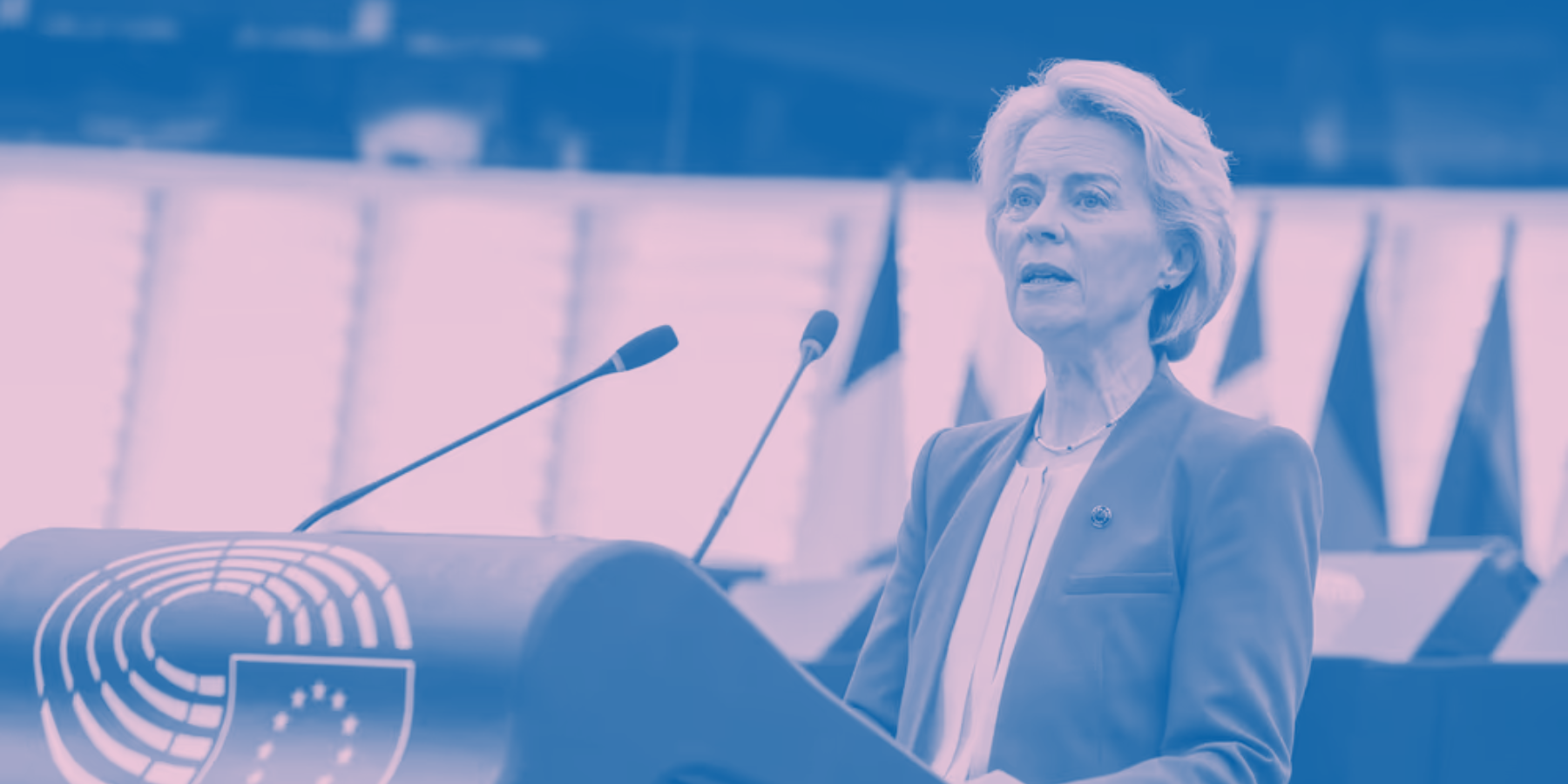
Ahead of the State of the Union address taking place 16 September 2026, Culture Action Europe sent a letter to European Commission President Ursula von der Leyen on 27 August 2026. The letter calls on the European Commission to match the political recognition given to culture in the Culture Compass and signed Joint Declaration with clear political action. The letter is shared in full below, and you can learn more about our Ask, Pay, Trust campaign here.
Dear President von der Leyen,
Last year, we wrote to you ahead of the State of the Union because culture was missing. This year, we are writing for a different reason: culture is finally present.
On 18 June, you joined the Presidents of the European Parliament and the Council in signing the Joint Declaration ‘Europe for Culture—Culture for Europe.’ For the first time in the history of the EU, three institutions came together around a shared political commitment to culture.
For a sector that has spent years making the case for why culture matters, this was a milestone. We felt recognised. We felt that the contribution culture makes to democracy, resilience, competitiveness and Europe’s place in the world was finally being understood at the highest political level.
That’s why we do not want to spend this letter asking you to recognise culture once again—because we believe you will. Instead, we want to talk about what recognition requires.
The EU’s new culture strategy, the Culture Compass, has started to provide an answer. But as one of the largest representative organisations for culture, we keep hearing one message from the sector: the distance between political recognition and political action needs to close.
For us, turning these commitments into action comes down to three things: Ask, Pay, Trust the Artist.
Asking the Artist means ensuring that cultural actors can exercise their agency
Do you know how many seats are reserved for representatives of the cultural sector in the AI Act Scientific Panel and Advisory Forum? In the European Innovation Council Board? In the Manuel Heitor group advising on Horizon Europe and FP10? In the Digital Services Act working groups? None.
AI and innovation are one clear example of a wider problem. Technologies are being developed that depend on human creativity, cultural content and data, while the people producing that value have little say over how these systems are designed and governed. The same question of agency arises when Europe shapes its policies on democratic resilience, competitiveness, preparedness, and sustainability.
Cultural actors should not be invited to adapt once the rules have already been written. They should help write them. With major legislative files ahead—including the European Innovation Act, European Research Area Act, Digital Fairness Act and the revision of the Copyright Directive—as well as new governance structures such as the Stakeholder Platform of the European Centre for Democratic Resilience and the Public-Private Preparedness Task Force, culture should be invited to the ‘room where it happens’ from the beginning.
Paying the Artist means resourcing Europe’s cultural ambition properly
The next Multiannual Financial Framework is the clearest test of the commitments made through the Joint Declaration.
More than 150 cultural organisations from across Europe are asking for a significantly more ambitious AgoraEU budget, with at least 25% dedicated to its cultural component. The European Parliament’s proposed €10.72 billion envelope is a strong benchmark for that ambition.
Culture needs to be clearly named, placed and funded in Horizon Europe and the European Competitiveness Fund, where there is currently no dedicated structural component or budget for the cultural and creative sectors. As Europe rethinks its place in the world, Global Europe should give international cultural relations a dedicated place in Europe’s external action.
We are also asking Member States to dedicate 2% of their National and Regional Partnership Plans to cultural chapters. During the pandemic, around 2% of the Recovery and Resilience Facility was allocated to culture and the creative sectors, providing an important example of EU common action that helped sustain the sector through the crisis. We should build on this precedent.
But paying for culture is also about the people who make it possible. An EU Artists’ Charter must help turn political recognition into better working conditions: fair remuneration, stronger social protection, fair contracts and greater security for artists and workers in the cultural and creative sectors, including when their work is used in AI and digital.
Trust the Artist means protecting the conditions in which culture can remain free and diverse
Artists and cultural organisations need the freedom to experiment and create work whose outcome cannot always be predicted in advance. They need independent institutions and an environment in which different voices and forms of cultural expression can emerge. These conditions matter for the sector itself, but also for Europe’s democratic resilience and for the credibility of the values it promotes. Yet across Europe, artistic freedom is threatened by censorship, political pressure and interference with cultural institutions and their funding.
The Joint Declaration recognises artistic freedom as a fundamental principle. The next step should be stronger, more binding protection through an EU Artistic Freedom Act, building on the approach already taken with the European Media Freedom Act.
The EU is doing great work in celebrating culture. But now this is not enough. Europe must also protect it when it is critical, uncomfortable or challenges those in power.
Ask, Pay, Trust the Artist:
- Strengthen cultural actors’ agency in making decisions that shape Europe’s future.
- Provide the resources that make cultural creation possible.
- Protect the freedom and autonomy without which culture cannot fulfil its role.
Together, these are the conditions needed to turn Europe’s political commitment to culture into practice.
Our letter addresses the changes needed now. But our ambition for culture should also extend beyond the next funding programme or policy cycle. Europe’s new recognition of culture gives us an opportunity to think again about the place culture has in the European project and whether the frameworks inherited from a time when culture was largely treated as a national responsibility, with the EU playing a supporting and often sectoral role, are sufficient for the strategic role we now expect culture to play.
That means looking again at the scope of the EU’s mandate and action in culture, building on the unique cross-border cultural space the EU has already helped create and asking how culture can shape rather than simply contribute to Europe’s wider political priorities.
When signing the Joint Declaration, you described culture as Europe’s ‘greatest strength.’ The Culture Compass has given that ambition a policy direction. This recognition invites us to ask if the foundations of Europe’s approach to culture are still adequate for the ambition now attached to it. The 2026 State of the Union is the right place to begin that reflection.
Photo Copyright: © European Union 2025 – Source : EP