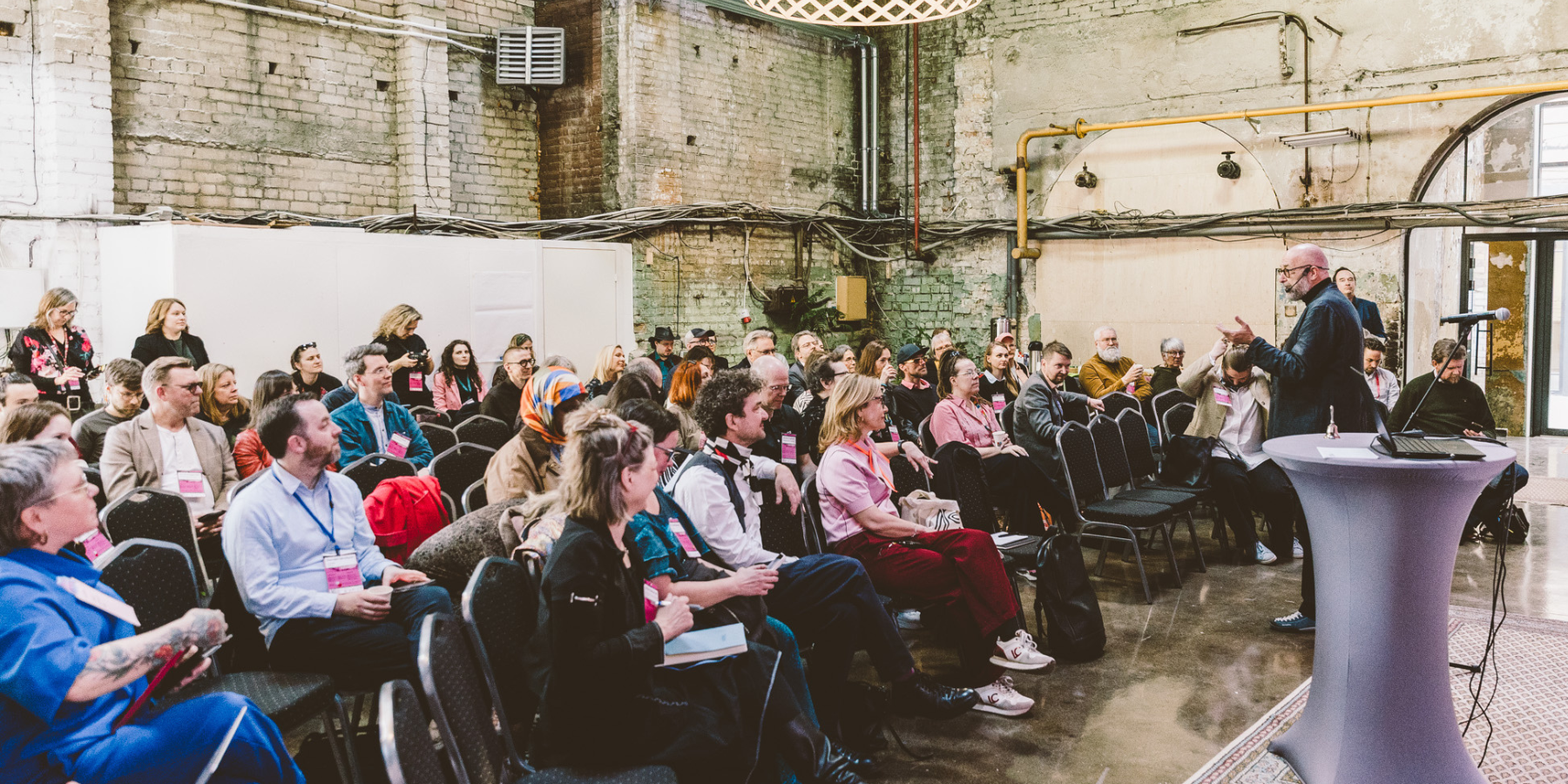
Learning to speak where decisions are made: the new School of Advocacy Network
This piece is written by Burak Sayin (Space-time Works) and Niels Righolt (Center for Kunst og Interkultur), reflecting upon the new chapter of the CAE Nordic-Baltic Hub and the Culture Action Europe Nordic-Baltic School of Advocacy Network.
When we talk about advocacy in the cultural sector, we often imagine a room in Brussels or sector representatives meeting with national cultural authorities. A meeting, a position paper, a moment of access. But the work that makes those moments possible happens much earlier and much closer to home, in the daily conditions of artists and small organisations trying to keep working at all. Building something around that conviction has taken time. We have gone from being an embryo for an interesting conversation to having a framework.
The Culture Action Europe Nordic-Baltic School of Advocacy Network is not a new departure so much as a deepening of something that has been forming for several years inside the Culture Action Europe’s Nordic-Baltic Hub. What is new is the commitment to treat advocacy as a shared learning practice rather than a specialist function, and to give it a durable structure. For the next two years the network is co-coordinated by four Culture Action Europe members: Space-time Works (SE), Center for Kunst og Interkultur (DK), Intercult (SE) and the Northern Dimension Partnership on Culture (LA).
The field already holds most of what advocacy needs. Artists and organisations understand their conditions with a precision no position paper can match, and the opportunity now is to make that knowledge travel further and reach the places where decisions are taken. What we are building is infrastructure: four Labs for Cultural Democracy in Møn, Nuuk, the Baltic region and Stockholm, where participants examine their own working conditions as primary material and produce what we call signals, observations from the field that feed directly into advocacy priorities; start-up support and mentoring for emerging organisations, with particular attention to Iceland, Greenland and the Faroe Islands; and an ongoing programme of online webinars and talks that keeps the learning open to those who cannot travel. Building the infrastructure is the work of the next two and a half years. What the field wants to do with it afterwards is the focus point, and that is not something we intend to decide alone.
Image credit: Oskars Upenieks Photography Videography, 2026