What Ortaklaşa Has Taught Us: Rethinking Local Cultural Policies in Türkiye
A guest essay by Özlem Ece, Director of Cultural Policy Studies at Istanbul Foundation for Culture and Arts (İstanbul Kültür Sanat Vakfı)
Across Europe and many other parts of the world, cultural policy today is shaped by deepening tensions. The rise of populist rhetoric, the reframing of culture through national identity and security discourses, shrinking civic space, and fragile funding systems are undermining both the autonomy of the cultural field and its role in sustaining democratic public life. The far-right gaining a majority in the CULT Committee after the 2024 European Parliament elections made this fragility suddenly visible. The fact that only 0.2% of the EU budget is allocated to culture further reflects how structurally constrained the field has become.
These vulnerabilities are not unique to Europe. In Türkiye, the cultural sector faces similar pressures—limited budgets, discontinuous funding, restrictions on freedom of expression, and a weakening of local autonomy. Local cooperation structures are often person-dependent rather than systemic, which makes cultural policy particularly fragile. As a result, the need to rethink cultural policy—especially at the local level—has become more urgent than ever.
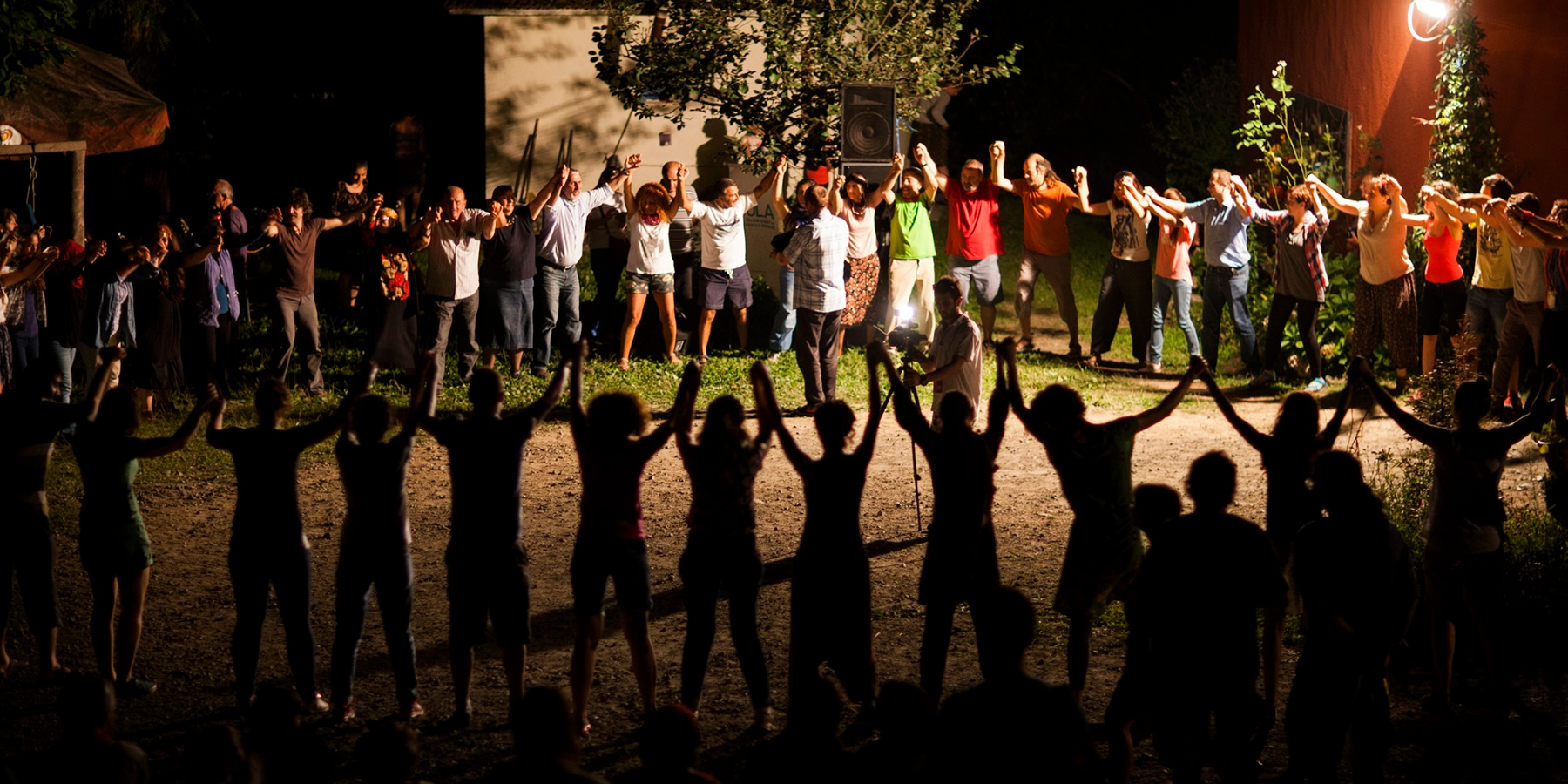
It is in this context that the Ortaklaşa: Culture, Dialogue and Support Programme offered a multi-year, practice-led space for rethinking cultural policy from the ground up. Over three years, we saw again and again that in moments of crisis, culture is not merely a field of artistic production; it is an infrastructure of trust, solidarity, and collective imagination. This is why we called the programme Ortaklaşa—’doing together.’ At a time marked by fragmentation, precarity, and uncertainty, what we needed most was to rebuild the capacity to see one another, to collaborate, and to imagine the future together.
A Learning Space Emerging from Türkiye’s Local Cultural Ecosystem
The three-year journey of Ortaklaşa revealed a multi-layered picture of Türkiye’s local cultural landscape.
- A biennial in Adıyaman enabling children to rebuild resilience through culture;
- A former power plant in Merzifon turned into a cultural hub;
- An unused municipal building in Eskişehir transformed into a community space;
- A local festival in the Black Sea region reconnecting culture with ecology;
- A youth orchestra in Hatay becoming a space for collective healing after the earthquake.
These examples showed us that local culture is not only about artistic expression—it is about rebuilding relationships, strengthening social cohesion, and shaping a shared future. Numbers also made this picture visible:
- 13 municipality–CSO partnerships
- €1.3 million in grants
- 44 cultural professionals employed
- 6 cultural venues renovated, 22 re-opened for cultural use
- ~50,000 participants, including 5,000 children
- 112 hours of deliberation, 471 participants, 6,000 km of field research
Together, these findings demonstrate both the richness of Türkiye’s local cultural ecosystem and the need for stronger structural support.
Fair Cultural Cooperation: Ortaklaşa’s Policy Contribution
One of Ortaklaşa’s most meaningful contributions is its conceptual and policy-oriented output.
Political scientist Prof. Dr. Füsun Üstel participated in deliberative meetings across cities, gathered insights from the field, and authored the programme’s concluding policy document: “A Roadmap for Fair Cultural Cooperation”. This roadmap offers an actionable framework for strengthening local cultural policies through mechanisms that are inclusive, participatory, and just.
It revolves around five core principles:
- Access — equal access to resources, spaces, and decision-making
- Participation — co-designing cultural policy with local actors
- Inclusion — strengthening diversity, equality, and representation
- Co-production — shared responsibility between municipalities and CSOs
- Trust — the cultural foundation of local democracy
These principles not only inform the future of local cultural policy in Türkiye but also resonate strongly with cultural policy debates across Europe.
Why Ortaklaşa Matters for Europe
European cultural policy today is pulled between two competing visions:
One that sees culture as a driver of democratic participation, freedom of expression, and solidarity;
And another that frames culture as an instrument of competitiveness, identity security, and economic contribution.
In this context, Europe needs grounded, practice-based examples. Ortaklaşa offers exactly that:
- A workable model of municipality–CSO cooperation: Going beyond person-dependent partnerships, the programme integrated training, dialogue, funding, and policy-making.
- Real evidence of culture’s role in building resilience: Türkiye’s varied contexts—especially the earthquake region—offer critical insight into culture’s role in healing and social cohesion.
- An operational example of fair cultural cooperation: The programme translates key European values (participation, access, equality, trust) into concrete, local practice.
Towards a New Phase
A new cycle of Ortaklaşa (2026–2028), supported by the EU, is now being designed. Its ambition is clear: to bring Türkiye’s local experiences into closer dialogue with cultural policy actors across Europe, strengthening shared learning and collective imagination.
In a moment of political uncertainty across the continent, Ortaklaşa offers a hopeful orientation: rebuilding trust locally, strengthening solidarity through culture, and treating participation as a democratic and cultural practice.
A Shared Invitation
From Ortaklaşa, we have learned that small-scale collaborations can yield wide-reaching change; cultural solidarity is essential in fragile times; and cultural policy gains meaning only when it is inclusive, participatory, and rooted in trust.
Let us rethink cultural policy together — and explore how to co-create a fairer, more participatory cultural future across Türkiye and Europe.
“Ortaklaşa: Culture, Dialogue and Support Programme,” supported by the European Union and carried out in collaboration with the Marmara Municipalities Union (MBB), is currently beginning the second phase of the project. Culture Action Europe will join as one of Ortaklaşa’s new partners. With the new partnership networks to be established, Ortaklaşa aims to facilitate cultural collaborations on a European scale.
This collaboration also feeds directly into our upcoming East Satellite, “Between Neighbours: Crossing Voices, Crossing Borders” in May, hosted by members Culture Unleashed and Space-Time Works, where we’ll continue crossing voices, borders, and local realities to imagine cultural policy from the ground up.
Photo Credit: Ortaklaşa