Connecting the Dots: Fair Arts Practice in Contexts (IETM)
IETM has published a new report, which was written by Kai Brennert and Phoo Myat Thwe, exploring what constitutes ‘fair practice’ for artists and cultural workers internationally in diverse contexts. The research piece explores what fairness means in the daily lives of diverse artists and collectives, and their perceptions of fair practice in the arts. The investigation sought to answer four questions:
- What are the specific ‘fair’ practices cultural actors are applying on a day-to-day basis?
- How do they successfully establish, operationalise, and sustain these mechanisms in their local contexts?
- What specific organisational, economic, or social challenges did they overcome to implement their model of fairness?
- What tangible or intangible results and impacts are they currently observing from these practices within their communities?
Through five case studies from Cambodia, Chile, Indonesia, Malaysia, and South Korea, which include three collectives, one festival, and one arts institution, the publication outlines some of the challenges, best practices, and reflections resulting from their research. Some overarching themes include:
- Fairness is a fluid process that should be maintained through everyday negotiations
- Retaining the care element of fair practices can be challenging when formalised in policy
- Future policy frameworks on fair practices must be co-shaped with the full diversity of communities impacted
- Building trust and active listening are vital for meaningful fairness
- Structural changes in the wider system are necessary so that fair practice becomes a reality
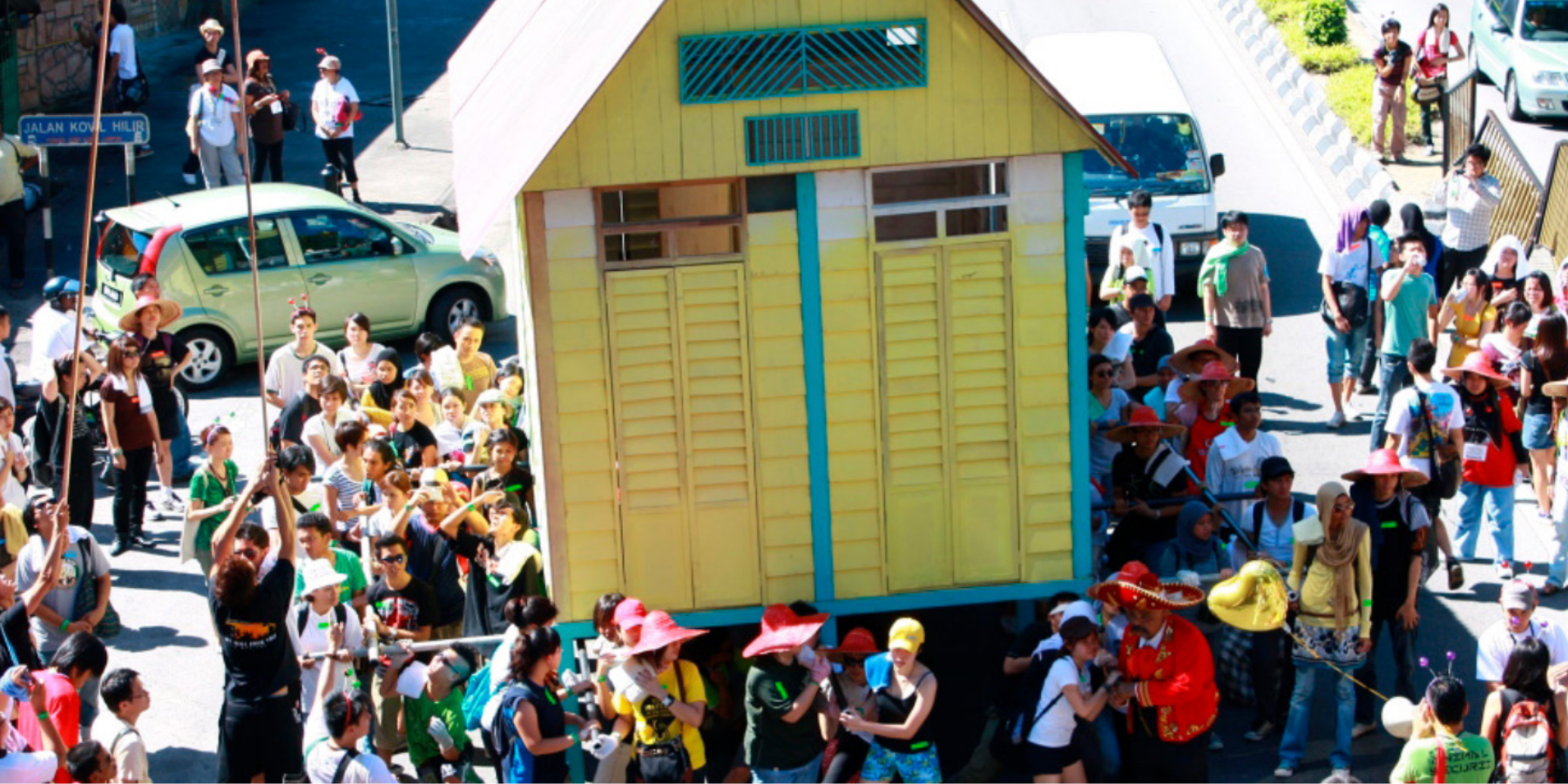
Photo credit: Projek Angkat Rumah, participatory house carrying project in central KL, 2010, photo by Gan Siong King