Europe BEYOND: Culture Holds the Future
Europe BEYOND: Culture Holds the Future is this year’s Central BEYOND. Europe BEYOND puts culture and the arts at the forefront of imagining Europe’s future. Taking place in Katowice, Poland from 2 to 5 June 2027, the international gathering brings together artists, creators, thinkers, policymakers, and cultural institutions from across the continent around the question: what social, geopolitical, and technological challenges will define the Europe ahead? What role should culture play in shaping it?
Europe BEYOND is built on a simple conviction: culture is one of Europe’s greatest strengths. It fuels our imagination that lets us picture a different future, builds resilience that helps our societies withstand and grow through crisis, and strengthens the community and democratic trust that hold Europe together through change. Imagination, Resilience and Agency are the red threads running through the conference, unpacked across the range of formats.
Europe BEYOND is co-organised by Culture Action Europe (CAE) – the major European network representing cultural organisations, institutions, artists, researchers, and activists in EU policy debates – and the National Centre for Culture Poland (NCC), a major Polish public institution dedicated to the development of the cultural sector through grant management, cultural education, research, capacity building, and the promotion of cultural heritage. Europe BEYOND is supported by the Ministry of Culture and National Heritage Poland and the European Union.
This event builds on a series of Culture Action Europe’s BEYOND gatherings that have been growing for years, bringing new voices and perspectives together to imagine, question, and shape the role of culture in Europe.
Key Themes
Europe BEYOND will address core questions regarding the future of the European community and the role of culture in a rapidly changing social, political, and technological landscape – organised around three tracks: Agency, Imagination and Resilience.
Agency turns the lens onto cultural power itself. Following the recognition of culture’s role in Europe’s future through strategic policy documents such as the EU Culture Compass and the Joint Declaration on Culture, the moment has come to turn that recognition into action – giving the sector the agency to take the leading role. This means improving the social status of cultural workers, ensuring fair working conditions, and building the support systems needed to protect the freedom of creation and the autonomy of the cultural sector – while ensuring that cultural actors have a seat at the table where the decisions shaping our common futures are made.
Imagination looks at the futures culture is already shaping. Rather than simply responding to change, culture imagines Europe’s future, drawing on histories, often contested, as material to build from. This means asking what AI development and governance could serve, what a green transition rooted in social justice should look like, and how demographic shifts could open new civic possibilities rather than be managed as a problem.
Resilience confronts what threatens that future: ongoing wars and conflicts, the fragile state of democracy and societal health, disinformation, and social polarisation. It asks what it takes for culture to keep societies critical, connected, and able to withstand crisis rather than fracture under it.
Why Poland and Katowice?
Poland reflects many of Europe’s complex and vivid historical experiences. It bridges post-communist and deeply European identities, tradition and modernity, ambition, and a unique sensitivity shaped by its location in Central Europe. Having endured centuries of foreign imperial rule and totalitarian regimes, Poland has navigated a long path toward democracy and integration into the European Union.
Katowice offers a compelling backdrop to this narrative as a model city of transformation. Once a heartland of heavy industry and coal mining, it is successfully reinventing itself as a hub for advanced technologies and the digital economy, while placing culture at the centre of its development. The site of the former “Katowice” coal mine has been transformed into a vibrant Cultural Zone, housing the Silesian Museum, the Polish National Radio Symphony Orchestra (NOSPR), and the International Conference Centre (MCK). Here, industrial heritage intersects with contemporary architecture, creative expression, and new approaches to urban development.
A member of the UNESCO Creative Cities Network since 2015, Katowice demonstrates how investing in culture and innovation transforms public space, the economy, and quality of life. This evolution culminates in the city earning the title of Polish Capital of Culture 2027. Katowice shows that transformation is an ongoing process rather than a static goal—making it a natural setting for a European debate on the future.
Who is Invited?
Europe BEYOND will bring together those who shape culture, analyse European transformations, and make decisions impacting public life. Katowice will welcome representatives from diverse countries, generations, backgrounds, and disciplines.
We invite:
- Artists, creators, and professionals from the cultural and creative sectors;
- Representatives of cultural institutions and civil society organisations;
- Intellectuals, researchers, and experts;
- Policymakers, local authority representatives, and public officials;
- Journalists and media representatives;
- Students and participants of all ages;
- Anyone passionate about culture and the future of Europe.
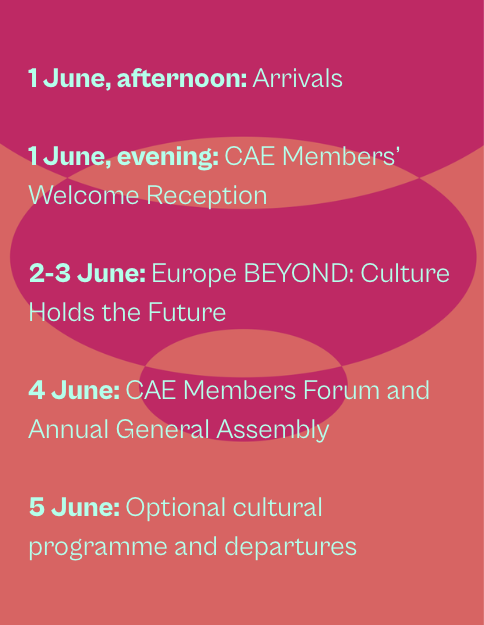
More details regarding the program, participation and registration will be announced in the coming months.