The Baltic, Repaired by Design
An evidence-led look at what works in a shallow, stressed sea by CAE Member Mika Heikkilä, based on an ArtMingle conversation with Annamari Arrakoski-Engardt.
The Baltic Sea’s recovery depends on method, patience and imagination. Drawing on insights from John Nurminen Foundation’s CEO Annamari Arrakoski-Engardt, this article explores how science, behaviour and culture combine to repair a stressed and shallow sea, from eelgrass meadows to sustainable fisheries and art that changes perception.
The Baltic Sea is a difficult patient. It is shallow, bordered by nine countries, and has carried too much nutrient and chemical load for too long. What comes through in conversation with Annamari Arrakoski-Engardt, chief executive of the John Nurminen Foundation, is a working method rather than a slogan. Stay close to researchers, translate new methods into practice, and create conditions that let partners move before rules harden. In her words it is better to do things freely on your own terms before it becomes regulatory and obligatory. Foundations then keep a tight loop between science and decision makers and point toward the most urgent directions so public money lands where it does the most good. In parts of the region where environmental civic culture is newer after long militarised coastlines she adds that European funds are often what finally unlock action.
The most vivid science-grounded case in the episode concerns eelgrass meadows. Eelgrass is a key Baltic species that builds living space for many others. Restoration only makes biological sense once nutrient loads have been cut enough for water to support growth. Protection then becomes basic ecology and seamanship. Choose sites away from point-source leakage. Keep heavy disturbance out. Draw clear lines against bottom trawling and against routine anchoring on the meadows. We now know that bottom trawling is very harmful for biodiversity she says. The picture is practical. Pick sites with the right light and depth, remove chronic stressors, and the meadow can recover.
Eelgrass is living infrastructure that needs protection where it can survive.
Behaviour at water level matters and she returns to it more than once. Food is one lever where ecology meets habit. The foundation financed gear and brokered a supply chain that made under-fished cyprinids viable again with bream foremost. Bones and preparation were the barrier. Supermarket fish patties were the fix. While eating a very tasty fish patty you are basically cleaning up the Baltic Sea she says because these species thrive in eutrophic conditions and crowd out others. The shift showed up in retail space and sentiment as lake caught bream regained supermarket shelves and consumers rediscovered a fish they had abandoned. Logistics and taste moved an ecosystem variable without scolding anyone.
Not everything is solvable through volunteer beach cleanups with trash bags. Young people are often the most active constituency and an important source of pressure. Yet the Baltic’s primary problems are eutrophication and hazardous substances. These require big investments and large projects. Beach clean ups are civic duty. The nutrient cycle is an engineering and policy task that must be financed and managed. The productive role for the young is to keep attention from drifting and hold decision makers to timetables.
On what to scale first with targeted money her answer is immediate. Use gypsum treatment on fields to cut agricultural discharges. Prohibit the discharge of tank washing waters into the Baltic. Eutrophication is the main problem and agriculture in Finland Sweden and Poland is the main source. Gypsum is a proven and monitorable way to keep phosphorus where crops need it. As for wash waters the Baltic is a shallow system that cannot buffer such chemical loads and a clear regional prohibition would be a local win and a template for international bodies in similar seas. These are moves that combine scientific justification with administrative simplicity and public legitimacy.
Act early and on your terms when the science is clear
If there is a mechanism for public mobilisation in her account it is repeatability plus record keeping. Baltic Sea Day coordinated by the foundation matters because actions are registered and counted. Organisations log what they do and where. Participation spreads to new countries. Social metrics and media mentions grow year on year. The practice is unglamorous forms and websites and monitoring yet this is how a map of scattered efforts becomes a regional ledger that policymakers must notice.
Behind all this is a theory of motivation tuned to sector reality. Farmers respond to data support and outcomes on their fields. Ports and chemical operators ask what is in it for us and they also read the wind of regulation. The foundation’s advice is to move early on one’s own terms before mandates arrive that may fit poorly and cost more. In neighbouring countries where environmental civic culture is still rebuilding money remains the most reliable motivator. It is an unsentimental diagnosis and it matches the projects the foundation has chosen.
None of this collapses science into messaging. Staying close to researchers means method and sequence. Reduce loads first then restore. Site carefully then protect. Measure what matters then speak in language people use at kitchen tables and on docks. The Baltic is not a problem solved by epiphany. It is a system kept within bounds by thousands of correlated decisions that people can understand and repeat. The work as she describes it is to make those decisions easy to take and hard to abandon.
Yet for Arrakoski-Engardt, design is not only technical. Culture is the longer current beneath it. From exhibitions in Suomenlinna to the Helsinki Biennale, she has seen how music, photography and installation art move people to care where data alone cannot. Art, she says, lets the sea speak in another language that reaches the gut before the brain. Facts tell us what must be done. Culture makes us want to do it. The Baltic’s recovery, in this view, depends as much on imagination as on engineering.
The questions raised in this essay are also shaping several Culture Action Europe connections. Both Different Times, New Solutions, the CAE Nordic–Baltic Satellite BEYOND (14–16 April 2026, Riga, Latvia) and Resilient Ties the Centre Satellite BEYOND (19–20 May 2026, Gdańsk, Poland) share their ties to the Baltic Sea as well as the ecological, social, and cultural challenges that connect the regions. These gatherings explore how culture can help navigate environmental stress, sustain social resilience, and translate local realities into collective learning.
At the same time, our project EMCCINNO: Supporting Sustainable Climate Transitions in Cultural and Creative Industries connects this regional reflection to broader questions of sustainable climate transitions, showing how cultural and artistic practice can support systemic change by bridging ecological urgency with social imagination and policy innovation.
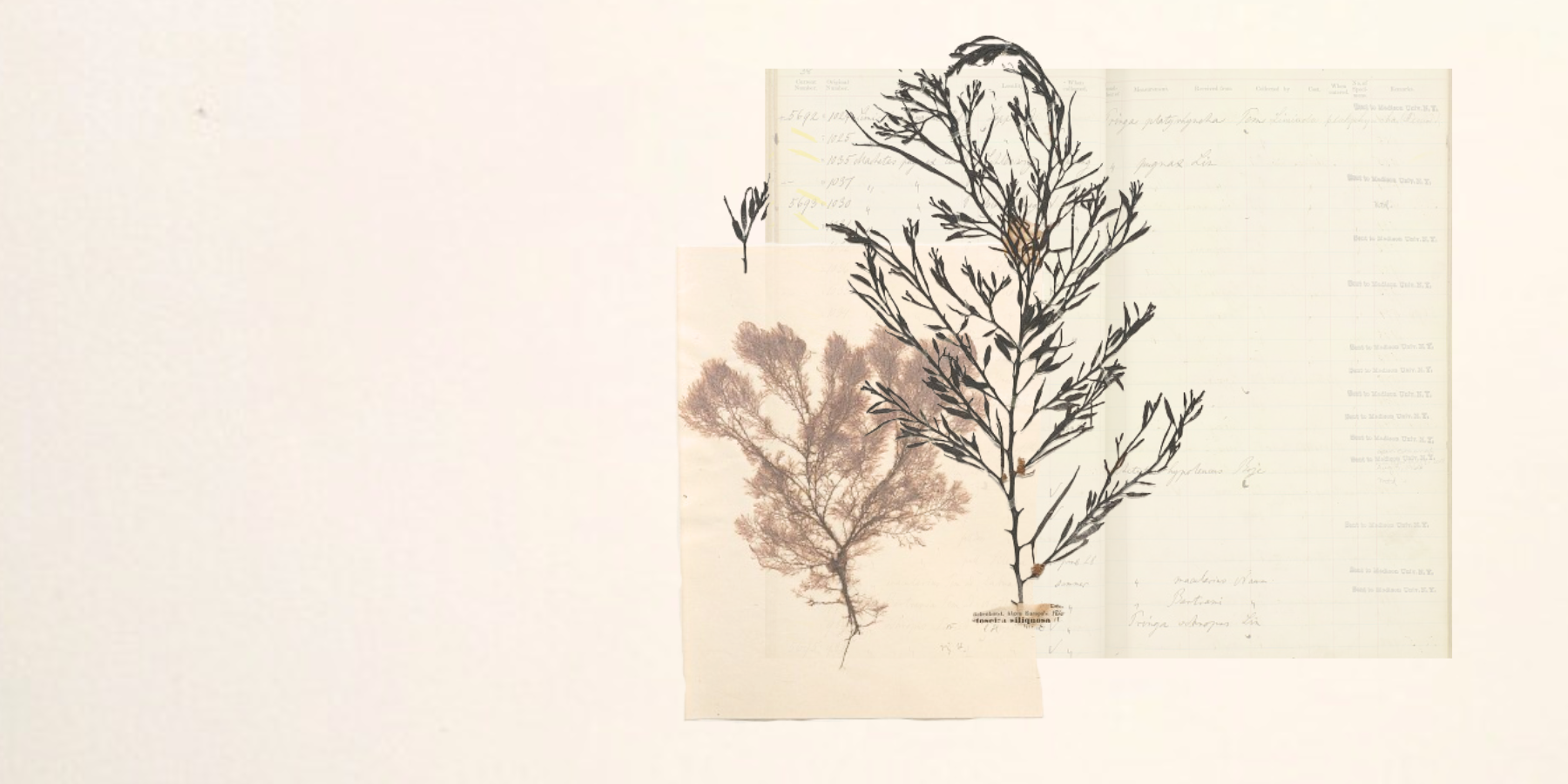
Photo Credit: The images are sourced from the public-domain collection of the Smithsonian National Museum of Natural History, NMNH – Botany Department. CC0 License